

After a bustling festive season, it’s officially Rasam Week at our home. As I mentioned in my very first post, rasam is one of our ultimate comfort foods. It’s what we turn to when we crave a home-cooked meal, what we make when we want to “detox,” and what we cook as an accompaniment for traditional South Indian occasions. Rasam is truly ubiquitous and deeply loved. Typically a clear, spiced broth, rasam literally translates to juice—or perhaps the very essence of South Indian food.
It was Girish’s turn to plan the weekly menu since he’s home for a full week after ages. And here’s what his menu looked like:
South Indian–style oatmeal for breakfast and rasam for dinner. Every. Single. Day.
Yes, I’m married to someone who can happily eat the same thing for days—thank heavens. As long as it’s one of his favorite dishes. It makes planning and cooking infinitely easier, and for that, I am immensely grateful. Here’s to someone who is completely fuss-free when it comes to meals—again, as long as it’s one of his choice dishes. He’s still very much a food critic, so it’s safest to stick to the requested menu.
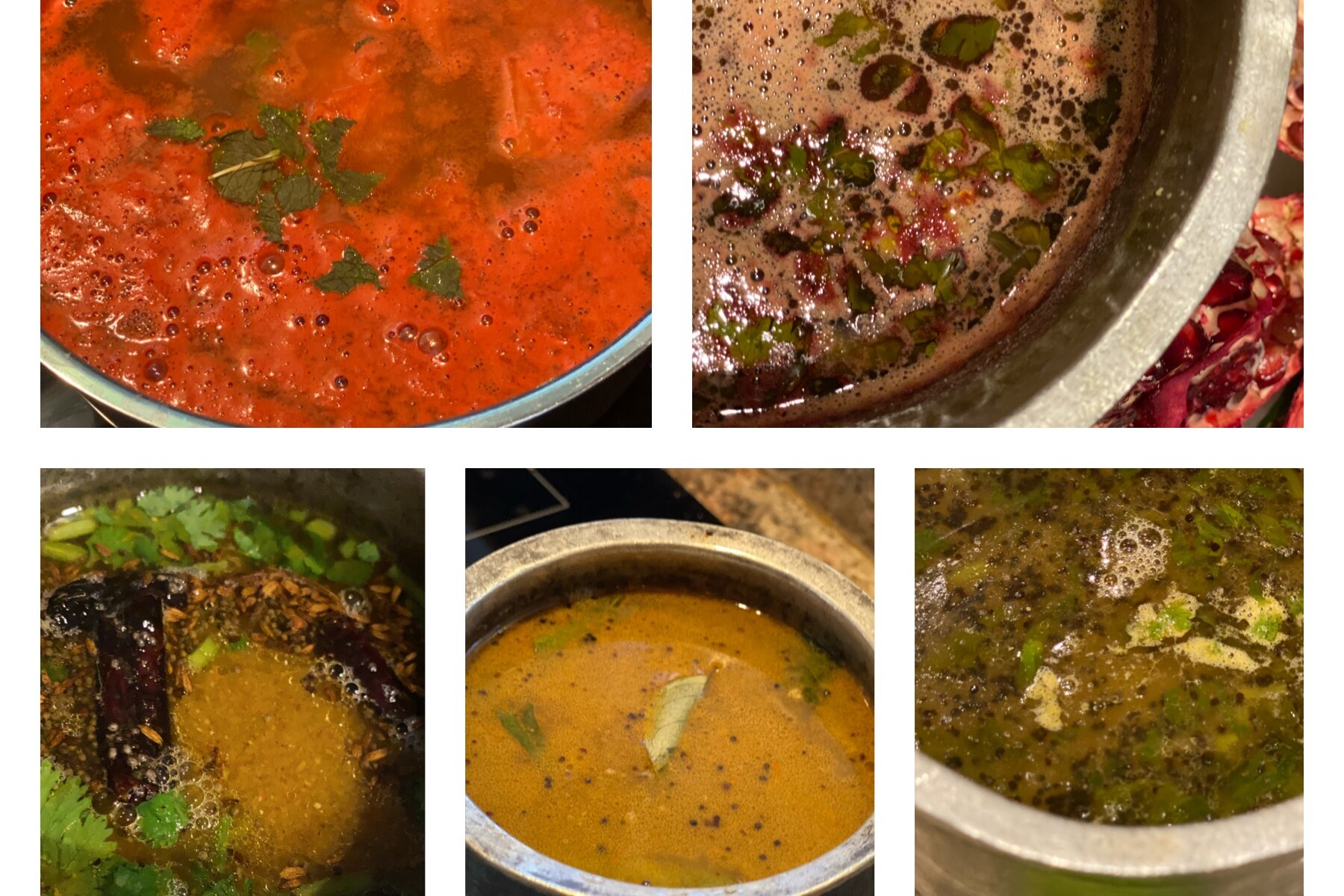
Naturally, I thought I’d chronicle the different types of rasams while I was at it. Garlic rasam is a house favorite and is made exactly the way my mother-in-law (the undisputed queen of rasams in the family) prepares it. It’s also one of Nikhil’s favorites and a frequent request whenever he’s craving Indian comfort food.
The lemon rasam recipe is adapted from Chandra Padmanabhan’s cookbook Dakshin. I’ve tried making lemon rasam many times before, but this method stands out as the best. I suspect it’s the garnish of crushed black pepper and cumin, finished with lemon juice, that gives this rasam its bright burst of flavor.
No matter the type, rasam is best enjoyed with hot white or brown rice, a dollop of fresh ghee, and a simple dry vegetable on the side. We love urulai roast the way Amma makes it, though you could also try a Chettinad-style potato roast or even a cauliflower fry as a delicious accompaniment.
Recipe for Garlic Rasam

Ingredients (Serves 4)
- Garlic cloves – 3 large or 4–5 small
- Cilantro – 1 small bunch, plus ¼ cup chopped
- Black pepper – ¾ tsp
- Cumin seeds – 1 tsp
- Tamarind – 1 small lime-sized ball
- Garlic rasam powder (store-bought) – 1 tsp
(You may also use regular rasam powder)
For Tempering
- Ghee – 2 tsp
- Mustard seeds – 1 tsp
- Cumin seeds – ½ tsp
- Curry leaves – 1 sprig
- Dry red Arbol chili – 1
- Garlic – 1 clove, finely chopped
Method
1. Soak the tamarind in warm water for about 5 minutes until soft. Extract the pulp, strain out fibers or seeds, and add enough water to make about 1¼ cups of tamarind extract (more than what you see in the picture).

2. In a blender, grind the garlic cloves, cilantro bunch, black pepper, and cumin seeds with 1 tbsp water into a fine paste.

3. Transfer the tamarind water to a heavy-bottomed vessel. I use an iyya chombu, a traditional alloy vessel commonly used for making rasam.

4. Add the rasam powder and half the chopped cilantro. Bring the mixture to a slow boil on medium heat, about 5–7 minutes, until the raw smell of tamarind and rasam powder disappears.
5. Add the garlic–pepper–cumin paste. Add another ½ to ¾ cup water if needed. Season with salt and taste, adjusting sourness and salt as required.
6. Let it boil for another 5–7 minutes, until the raw garlic smell cooks out.
7. Add the remaining chopped cilantro and simmer for 2–3 minutes.
8. Heat the ghee in a small pan. Add mustard seeds; once they splutter, add cumin seeds, red chili, curry leaves, and chopped garlic. Sauté briefly, then pour the tempering into the rasam. Cover with a lid until ready to serve—this helps the flavors infuse fully.
Serve hot with rice, ghee, and your favorite vegetable side. Divine.
Recipe for Lemon Rasam
(Didn’t manage to click pictures for this one in time—but will add them eventually)
Ingredients
- Cooked toor dal – ¼ cup
- Vine-ripened cherry tomatoes – ¾ cup, chopped
(Cherry tomatoes give the best flavor, though regular vine tomatoes work too) - Juice of 1 large lemon
- Cilantro – 1 small bunch, chopped
- Ginger – 1-inch piece, grated
- Green chilies – 4
- Cumin seeds – ½ tsp
- Black peppercorns – ¾ tsp
- Salt – to taste
- Turmeric powder – ½ tsp
- Rasam powder – ¾ tsp
For Tempering
- Ghee – 2 tsp
- Mustard seeds – 1 tsp
- Asafetida – ½ tsp
- Dry red Arbol chili – 1
- Curry leaves – 1 sprig
Method
Blend the ginger and green chilies into a smooth paste.
Powder the cumin seeds and black peppercorns using a coffee grinder or mortar and pestle. I prefer a smooth powder, though a slightly coarse texture works too.
In the iyya chombu, combine the cooked dal with about 1½ cups water, salt, and turmeric. Adjust water and salt to taste.
Add the tomatoes, ginger–chili paste, and rasam powder (optional, but adds depth). Sprinkle in some chopped cilantro. Bring to a gentle boil until the raw smell of tomatoes and rasam powder cooks off.
In a separate pan, heat the ghee and add all the tempering ingredients. Add 1 tsp of the cumin–pepper powder to the hot ghee, turn off the heat, and pour the tempering into the rasam.
Finally, add the lemon juice and mix well. Garnish with more chopped cilantro.

The way you write too is Devine! Love reading your write-ups before the recipe too 🙂
Thanks for the sweet comments Neeraja.
definitely a different one, will try this next time, thanks for post