
I’ve clearly been in a bit of a blogging rut lately. As I mentioned in a post a couple of years ago, it’s fascinating how changes in seasons, moon cycles, and the surrounding environment have such a profound effect on our bodies and minds. When you really take the time to understand why we honor certain festivals and prepare specific foods, you begin to see the deep logic behind these traditions and customs. Seasonal transitions influence not only how we feel physically and mentally, but also the kinds of foods we are drawn to.
I’ve previously written about why we celebrate Navaratri, but it truly is the perfect time to prepare the body for winter—to gently “detox” from summer and build warmth for the next seasonal cycle. Navaratri marks nine nights of worshipping the feminine energies, followed by Diwali, the festival of lights.
It’s a busy and meaningful time of year. We celebrate nine forms of the Goddess, each symbolizing different qualities and values, with the intention of invoking those same qualities within ourselves. Navaratri is my favorite festival for its strong female centricity. The dark forces of ego and arrogance, symbolized by the demon Mahishasura, are overpowered and vanquished by the radiant Goddess Durga riding a tiger—bringing balance, tranquility, and stability to the human gunas or traits. The offerings, or prasadam, are usually protein-packed and nourishing, perhaps symbolizing the strength and energy required by the Devi as she prepares for battle.
This year, I wanted to collaborate with a dear friend and fellow Instagrammer madetolovemagic for a daily account of the Devis and neivedhyams. She will be sharing daily posts about the different feminine energies we worship, and I will complement those with the daily neivedhyam or offering. You can follow both of us on Instagram—links are shared on our profiles.
Below is the daily menu for Navaratri. I’ll be posting the recipes a day in advance so you can follow along easily. While most of these are traditional festival recipes, I’ve tried to keep mornings simple by incorporating one-pot or pressure-cooker recipes wherever possible, to save time during busy mornings. Do share your feedback as you follow along—here, on Facebook, or on Instagram.
Navaratri Daily Menu
Day One: Rice Coconut Jaggery Payasam and Venn Pongal
Evening Prasadam: Rajma (Kidney Bean) Sundal
Day Two: Sakkarai Pongal and Puliyodharai (Tamarind Rice)
Evening Prasadam: Thengai Mangai Pattani Sundal
Day Three: Sweet Potato Kheer and Kothamalli Saadham (Cilantro Rice)
Evening Prasadam: Sprouts Sundal
Day Four: Badam Kheer and Kadhamba Saadham
Evening Prasadam: Kala Chana Sundal
Day Five: Paal Payasam and Yoghurt Rice
Evening Prasadam: Peanut Sundal
Day Six: Wheat Rava Payasam and Lemon Rice
Evening Prasadam: Kabuli Chana Sundal
Day Seven: Pumpkin Payasam and Coconut Rice
Evening Prasadam: Black-Eyed Peas Sundal
Day Eight: Kalkandu Saadham and Ellu Saadham (Sesame Rice)
Evening Prasadam: Bengal Gram (Kadala Paruppu) Sundal
Day Nine: Akara Adisal and Green Mango Rice
Evening Prasadam: Moong Dal Sundal
Day Ten: Sakkarai Pongal and Karuvepalai Saadham (Curry Leaves Rice)
Day One of Navaratri
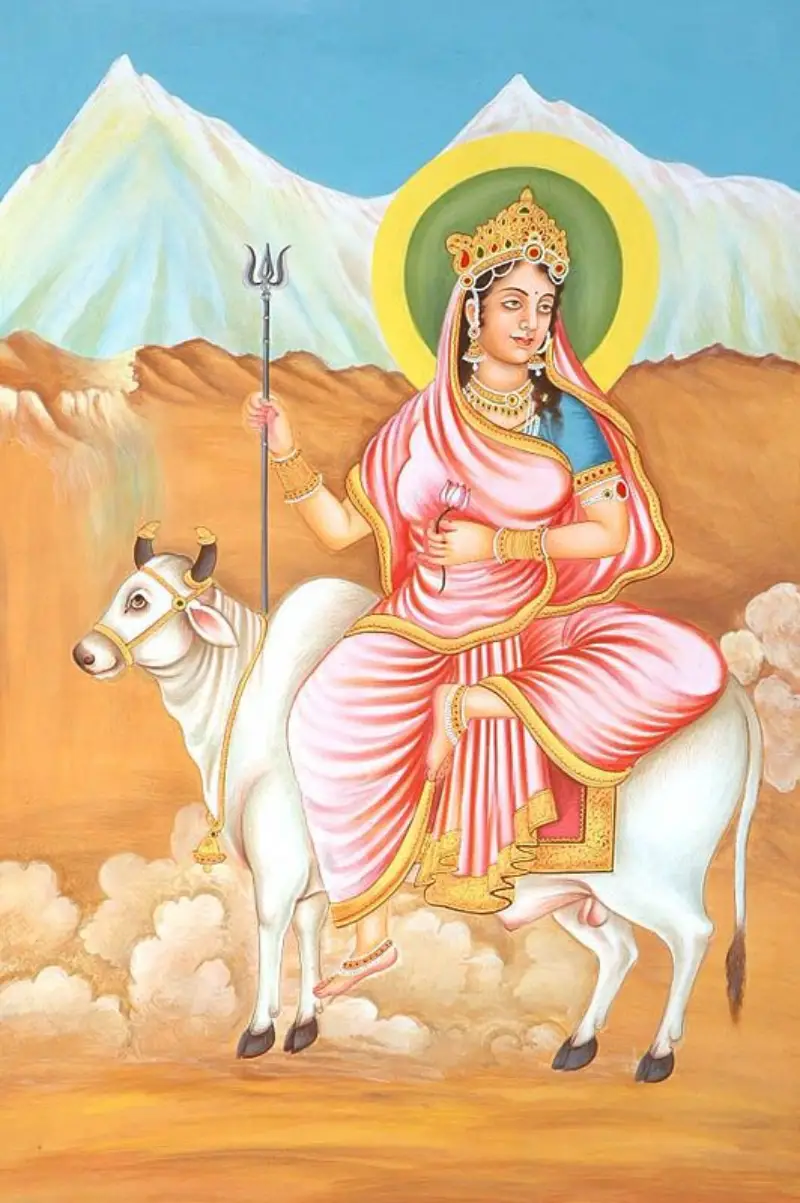
The first of the nine forms of the Goddess is Sailaputri, the Daughter of the Mountains—Sati reborn, strong and eternal. She rides a white bull and carries a trident. She resides in the first chakra, the Muladhara Chakra, beginning her ascent through the aspirant’s meditation as Parvati. She blesses her devotees with forbearance and composure.
(See madetolovemagic’s post for the daily Devi story.)
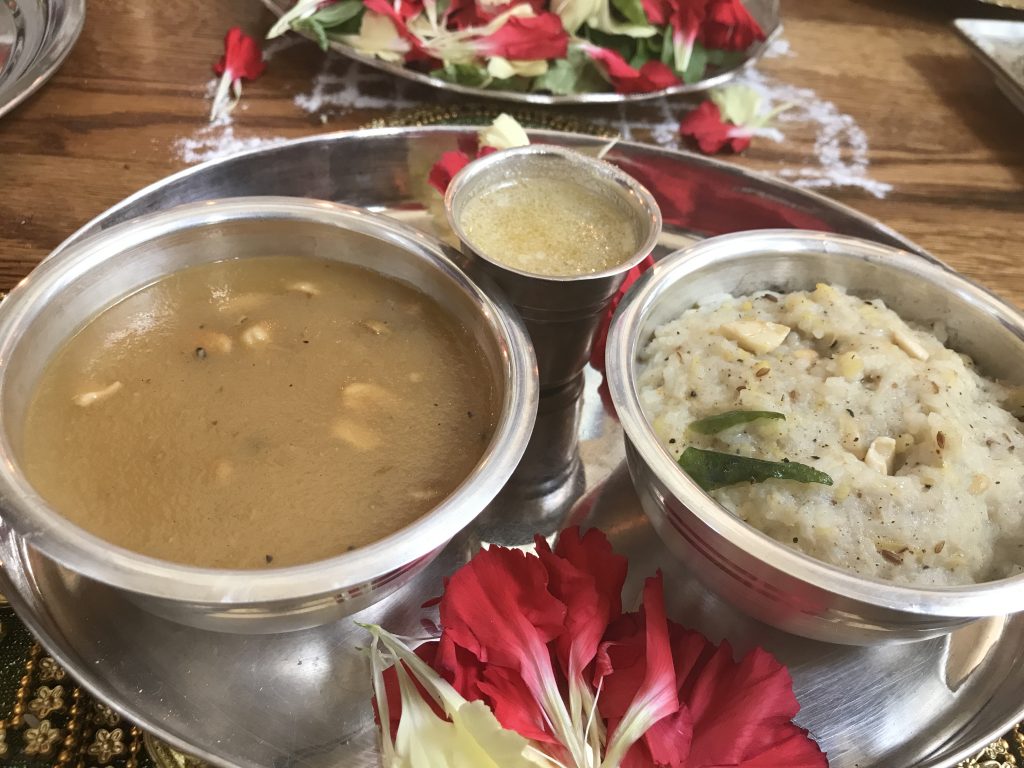
Rice Coconut Jaggery Payasam
(From Chitra Viswanathan’s app and blog)
Ingredients
- Rice – 2 tbsp
- Freshly grated coconut – 2 tbsp
- Jaggery – ¾ cup (or jaggery powder/coconut sugar)
- Milk or coconut milk – 1 cup
- Chopped cashews – 1 tbsp
- Raisins – 1 tbsp
- Ghee – 2 tbsp
- Cardamom powder – 1 tsp
Method
Wash and soak the rice for 1 hour. Drain and grind with the coconut, adding enough water to make a smooth paste.
Mix the jaggery with hot water and bring it to a boil. Strain if needed to remove impurities (or use jaggery powder/coconut sugar).
Add the rice–coconut paste to the jaggery syrup, stirring continuously to avoid lumps. Let it simmer until the paste cooks through.
Add cardamom powder, followed by milk or coconut milk, and allow it to simmer gently.
Fry the cashews and raisins in ghee and add as garnish.
Venn Pongal
You can find the recipe for Venn Pongal here.
Rajma Sundal
Ingredients
- Rajma (kidney beans) – 1 cup
- Tamarind paste – 1 tsp
- Salt – to taste
For Dry Roasting and Grinding
- Dry Arbol chilies – 3–4
- Coriander seeds – 1 tbsp
- Asafetida (hing) – ½ tsp
For Tempering
- Oil – 1 tbsp
- Red chilies – 2–3
- Mustard seeds – 1 tsp
- Urad dal – 2 tsp
- Curry leaves
Method
Soak the rajma overnight (a pinch of baking soda is optional). Pressure cook with salt until soft but not mushy—about 2–3 whistles on medium heat. You can also use a slow cooker or Instant Pot.
Drain the beans and mix with the ground spice powder, tamarind paste, and salt. Let it rest for 10 minutes.
Heat oil in a pan, add the tempering ingredients, and cook until the mustard seeds crackle and the urad dal turns light brown. Pour this over the spiced rajma and cook for another 5 minutes if desired.